Weekly budget planner
Plan one week at a time: money in, bills due, spending and savings.
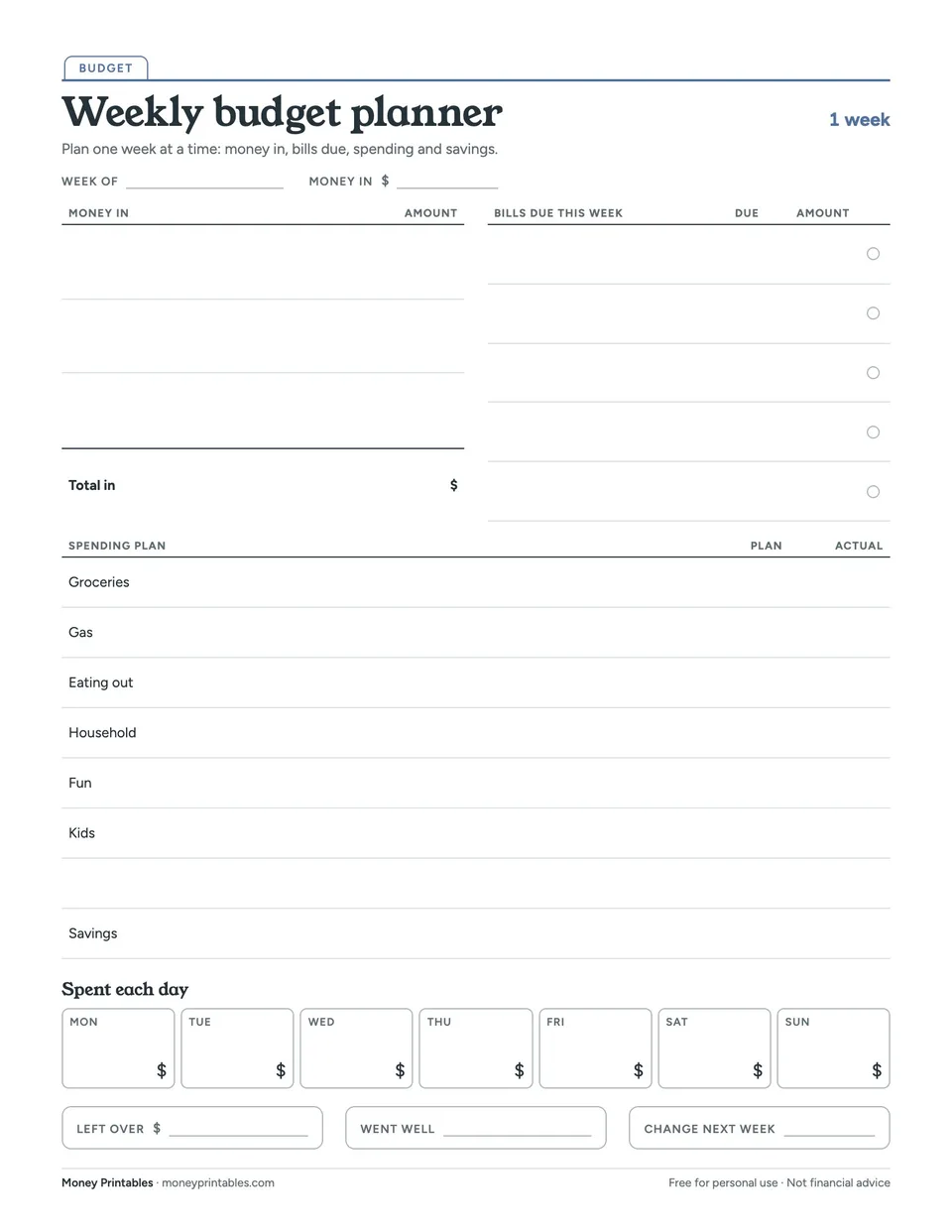
A month can feel too long to plan. A weekly budget is short enough to stay on top of: what money comes in this week, which bills are due, and how much is left for everything else.
There is a day-by-day spending strip so you can see the week at a glance, and a quick review box for next week.
How it works
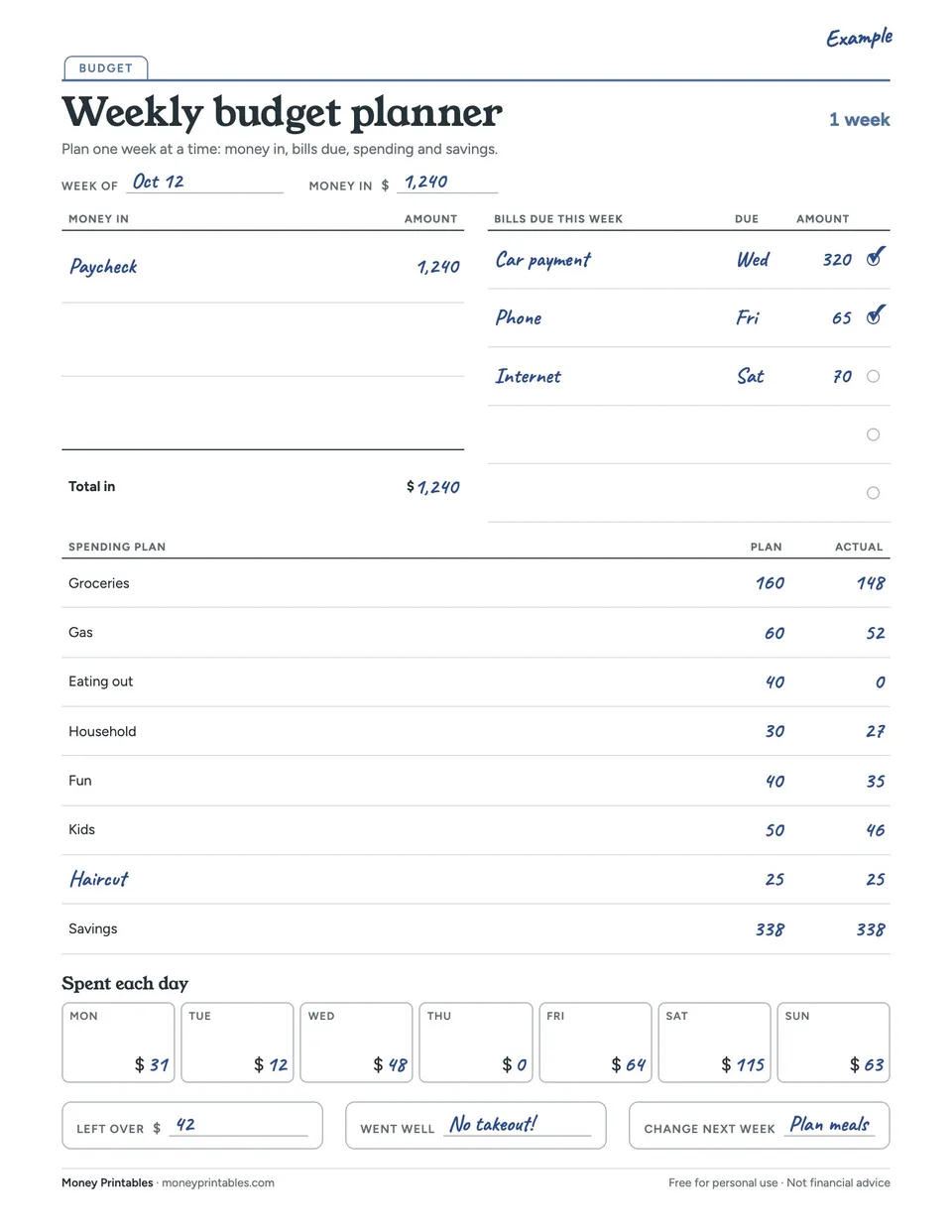
Write the money coming in this week and the bills due before next week. Plan everyday spending and savings with what is left. Log what you spend each day, then review at the end of the week: what is left, what went well and one thing to change.
How to use it
- Write the money coming in this week and the bills due.
- Plan everyday spending and savings with what’s left.
- Log daily spending and review at the end of the week.
Ways to use it
- Paid weekly: one sheet per paycheck.
- Paid monthly: split the month into four weekly sheets.
- Couples: plan together on Sunday evening.
Tips
- Plan on the same day each week, like Sunday evening.
- Look ahead to bills due early next week.
Questions
How do I make a weekly budget?
List money in, bills due this week, and a plan for spending and savings. Track daily spending and review at the end of the week.
Is a weekly or monthly budget better?
Weekly budgets are easier to keep track of, especially when money is tight or you are paid weekly. Monthly budgets are good for big-picture planning.
When should I plan my week?
Pick the same time each week, like Sunday evening, so it becomes a habit.
Goes well with
- Weekly money date check-in A 15-minute weekly money check-in, alone or as a couple.
- Grocery budget tracker A weekly grocery budget and a log of every trip.
More budgets
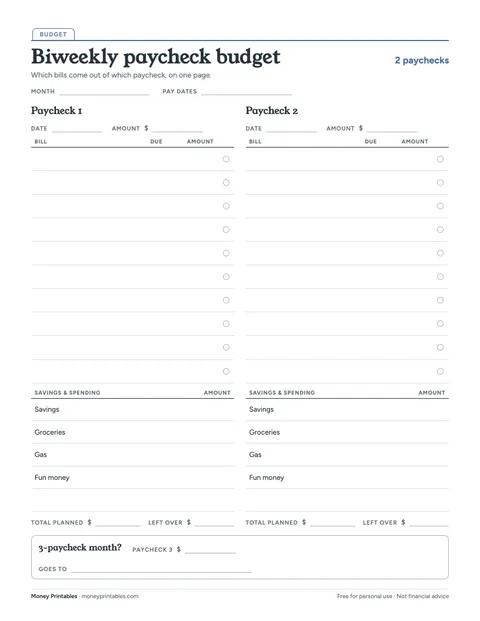
Biweekly paycheck budget
Which bills come out of which paycheck, on one page.
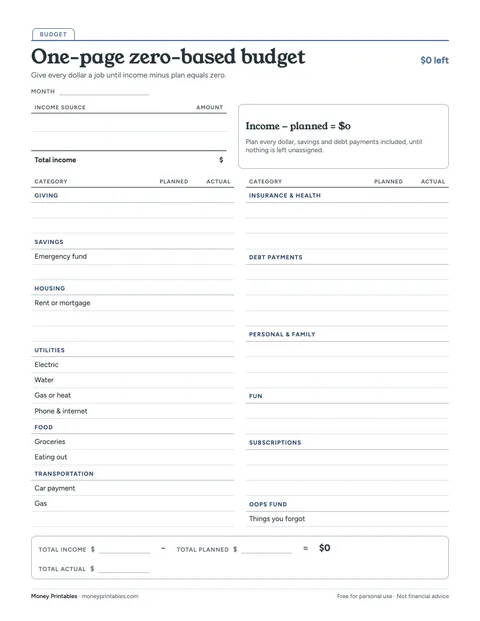
One-page zero-based budget
Give every dollar a job until income minus plan equals zero.
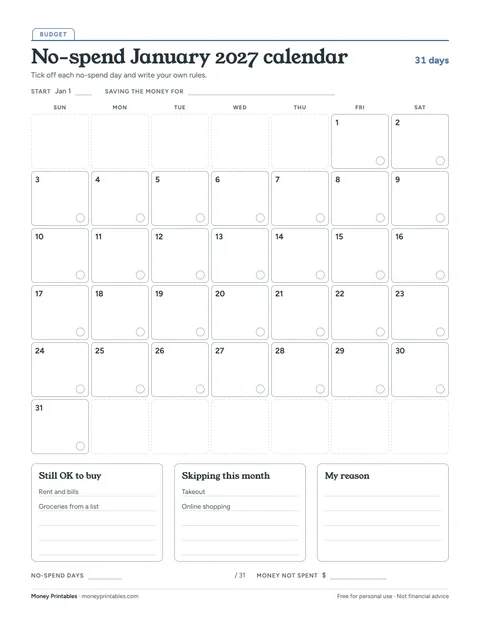
No-spend January 2027 calendar
Tick off each no-spend day and write your own rules.
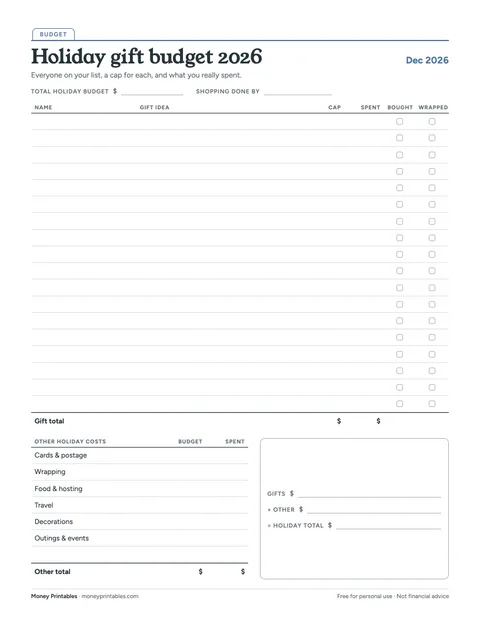
Holiday gift budget 2026
Everyone on your list, a cap for each, and what you really spent.
This printable is a general planning tool, not financial advice. Read the full disclaimer.