One-page zero-based budget
Give every dollar a job until income minus plan equals zero.
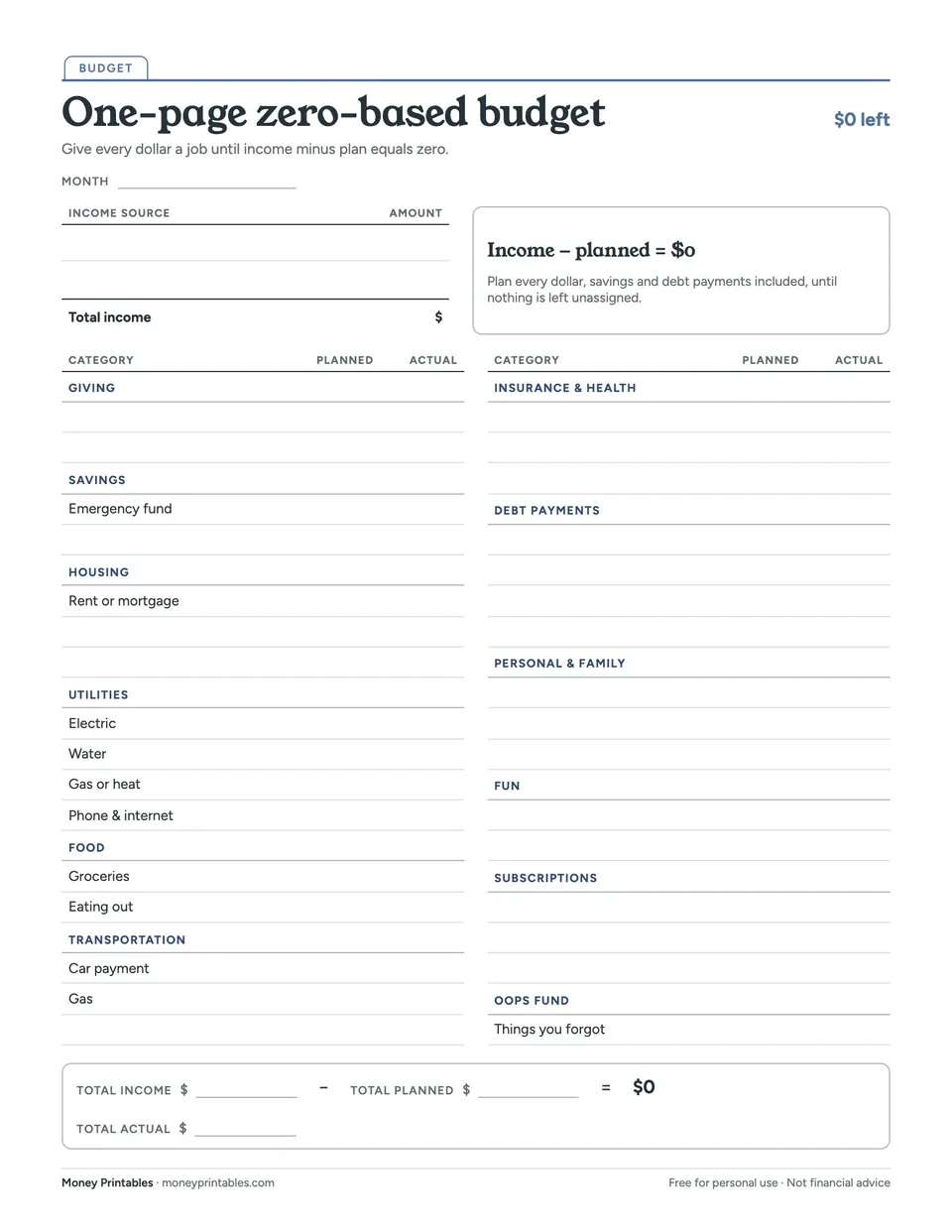
A zero-based budget means you plan every dollar of income before the month starts, including savings, until income minus your plan equals zero. It does not mean spending everything; savings and debt payments are part of the plan.
This is a single page with the common categories already laid out, a planned and an actual column for each, and the zero check at the bottom.
How it works
In a zero-based budget, income minus everything you plan (spending, bills, savings and debt payments) equals zero. Zero does not mean spending it all; it means every dollar has a planned job, including savings.
How to use it
- Add up the month’s income at the top.
- Fill in the planned column for each category, savings included, until the plan matches your income.
- During the month, fill in what you actually spent and compare.
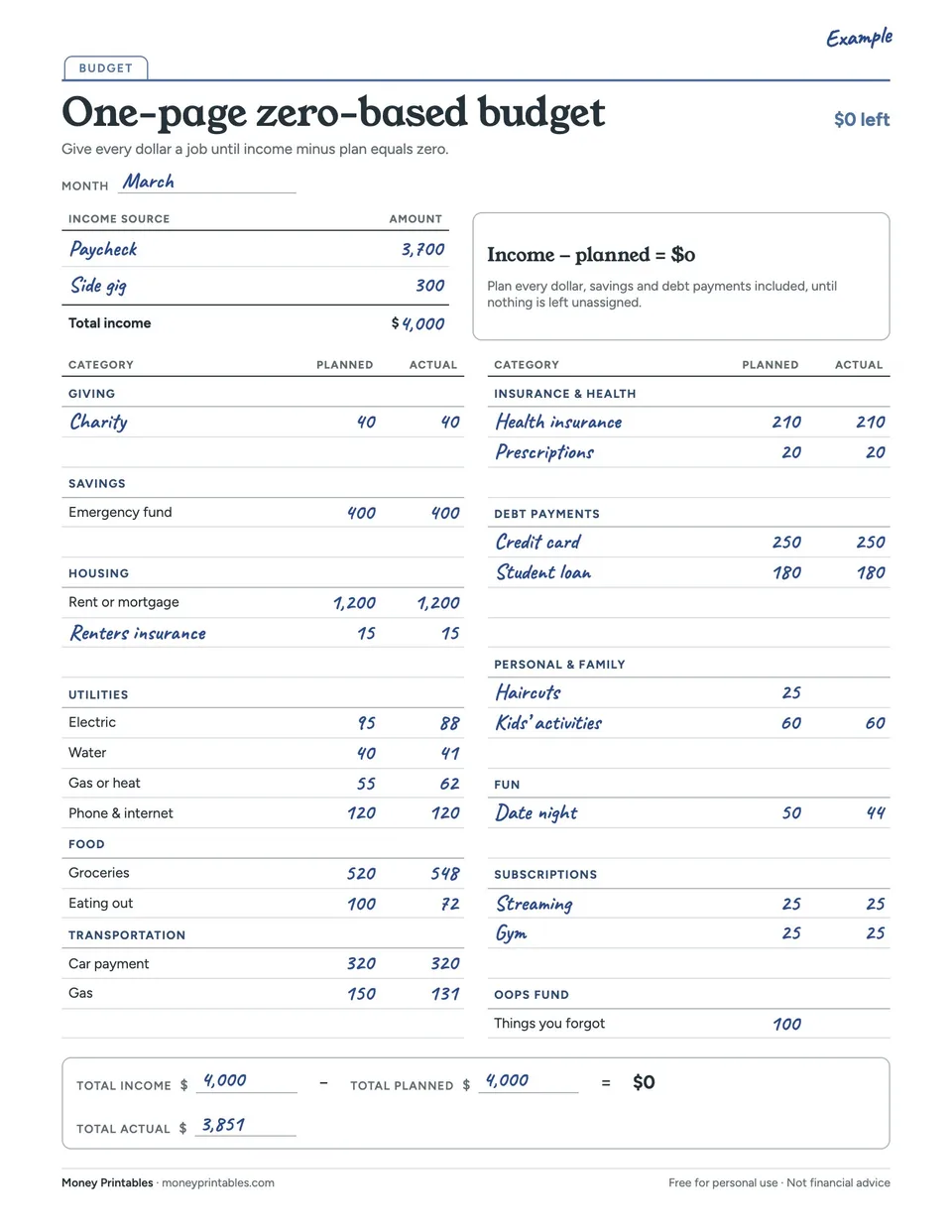
Ways to use it
- Plan on the first of the month, review on the last.
- Use a separate sheet for irregular months like December.
- Start with last month’s bank statement for real numbers.
Tips
- Start with last month’s bank statement to get realistic numbers.
- Leave a small "oops" line for things you forgot. Everyone forgets something.
Questions
What is a zero-based budget?
A budget where you plan every dollar of income before the month starts, so income minus your plan equals zero. Savings and debt payments count as part of the plan.
Is zero-based budgeting good for beginners?
It can be, because it is simple to check: does the plan equal your income? This one-page version keeps it manageable.
What if I overspend in a category?
Move money from another category during the month and adjust next month’s plan. The "oops" line helps too.
Goes well with
- One-page monthly budget Income, bills, spending and savings, with budget and actual side by side.
- 50/30/20 budget worksheet Split your income into needs, wants and savings.
More budgets
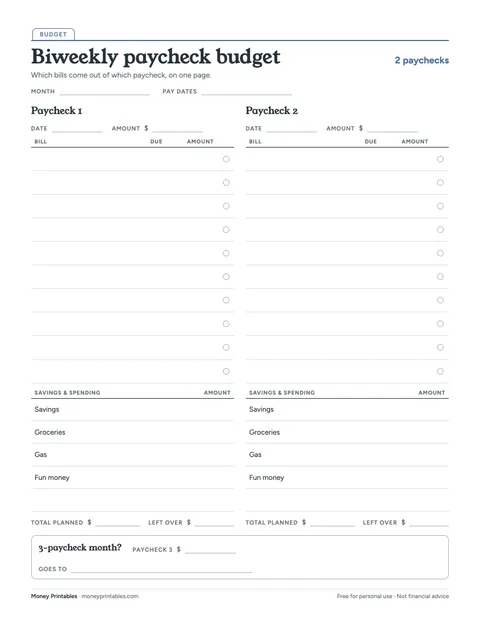
Biweekly paycheck budget
Which bills come out of which paycheck, on one page.
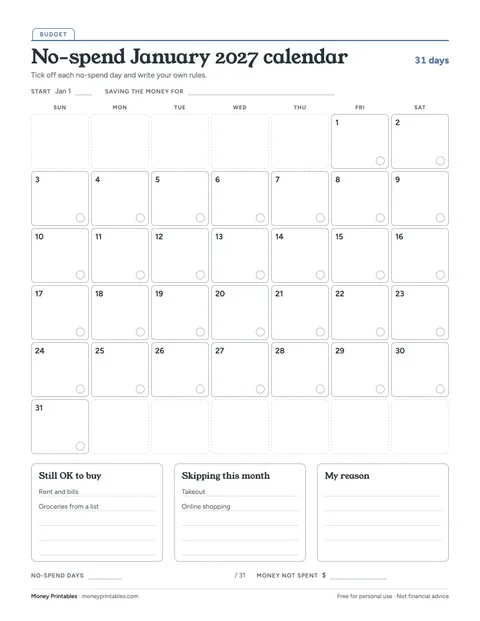
No-spend January 2027 calendar
Tick off each no-spend day and write your own rules.
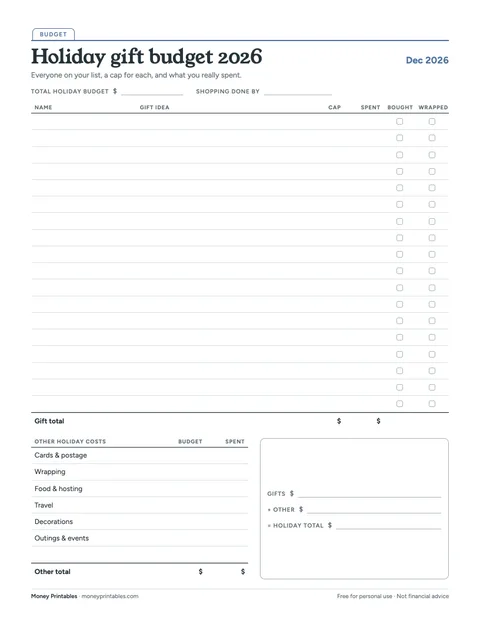
Holiday gift budget 2026
Everyone on your list, a cap for each, and what you really spent.
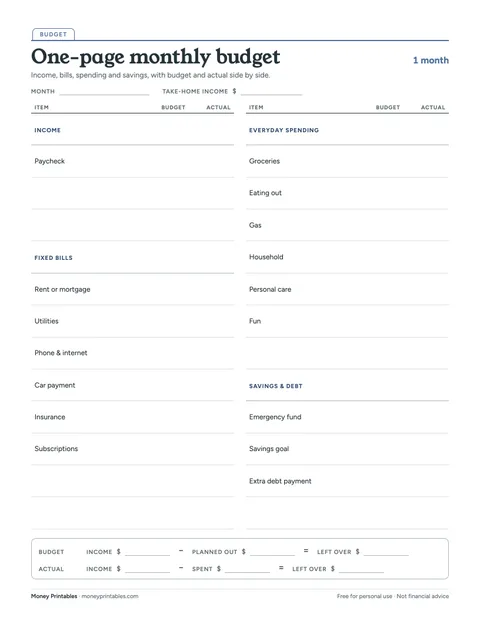
One-page monthly budget
Income, bills, spending and savings, with budget and actual side by side.
This printable is a general planning tool, not financial advice. Read the full disclaimer.