Biweekly paycheck budget
Which bills come out of which paycheck, on one page.
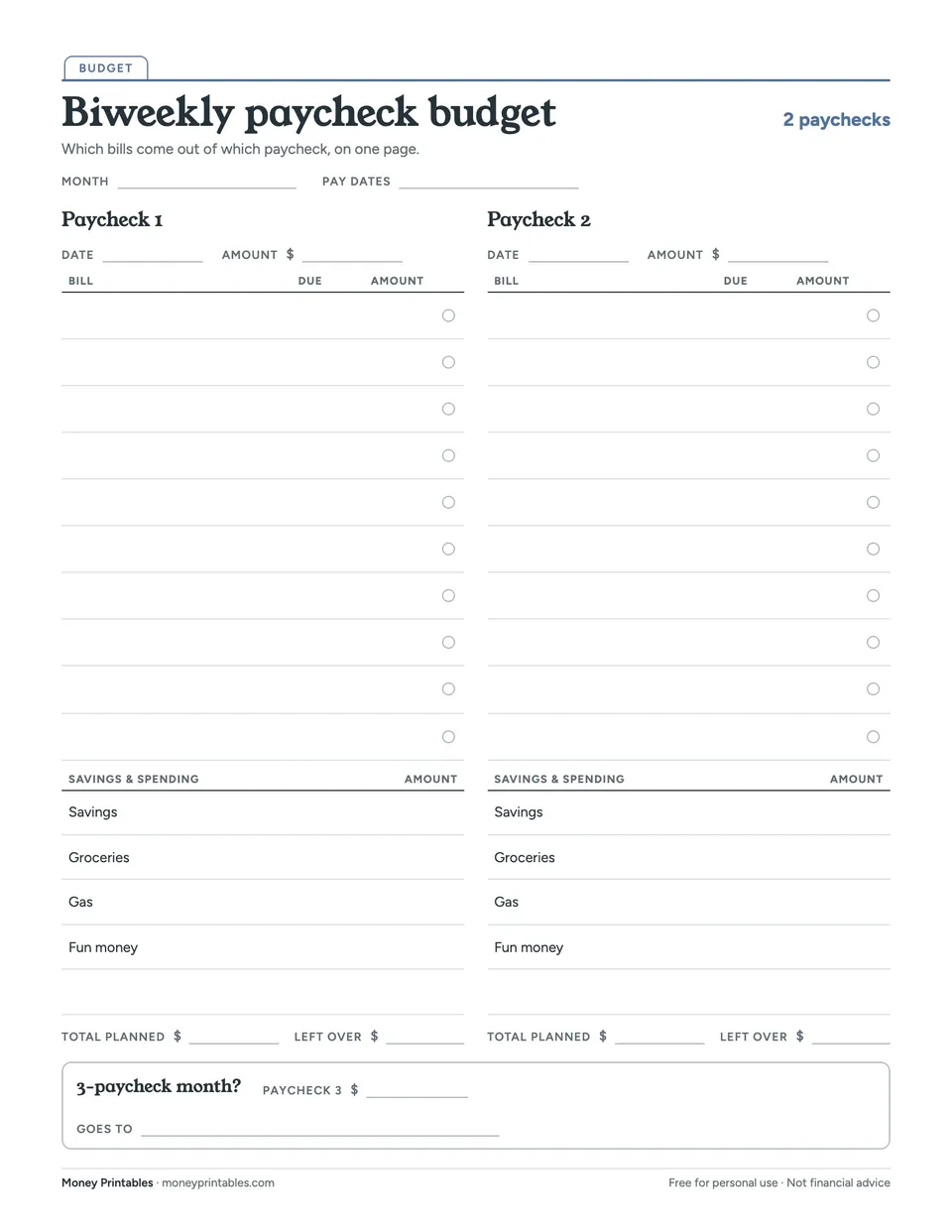
If you are paid every two weeks, a monthly budget leaves out the question that matters most: which paycheck pays which bill? This sheet splits the month into two columns, one per paycheck, so you can see whether rent and the car payment both fall on the first check.
There is also a box for the two months each year when you get three paychecks. Planning that extra check ahead of time is one of the easiest wins in budgeting.
How it works
Instead of one monthly budget, you plan each paycheck. List the bills due before your next payday under the paycheck that pays them, then add savings and spending money. What is left over should be zero or a little above.
Paid every two weeks, you get 26 paychecks a year, so two months each year have three paychecks. Planning that extra check ahead is one of the easiest ways to get ahead.
How to use it
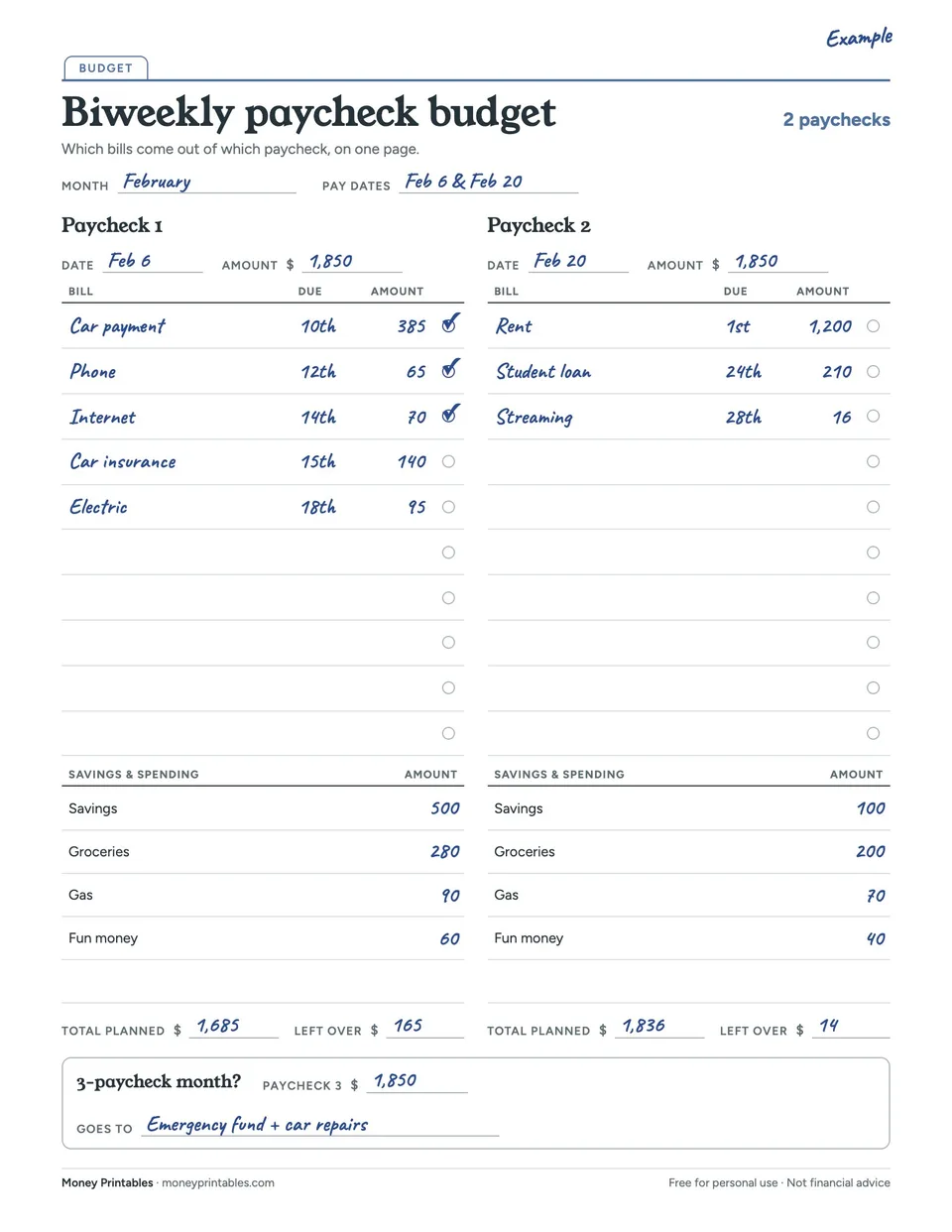
- Write each paycheck’s date and amount at the top of its column.
- List the bills due before your next payday under the paycheck that covers them.
- Add savings and spending money, then check that "left over" is zero or more.
Ways to use it
- Paid weekly: use both columns for two weeks, and print two sheets a month.
- Two incomes: one column per person’s paycheck.
- Pair it with the bill calendar to see due dates at a glance.
Tips
- If one paycheck is overloaded, ask the biller to move a due date. Many will.
- Decide now what the third paycheck goes to, before it arrives.
Questions
How do you budget with biweekly pay?
Budget each paycheck separately: list the bills due before the next payday, then savings and spending money. Plan the two "third paycheck" months separately.
Which months have three paychecks?
It depends on your first payday of the year. Count every other Friday (or your payday) from your first one; two months will have three.
What if one paycheck has too many bills?
Ask the company to move a due date. Many lenders and utilities will let you choose.
Goes well with
- Monthly bill calendar Every bill on its due date, with ticks for autopay and paid.
- $5,000 biweekly paycheck savings challenge One amount per payday, 26 paydays, $5,000 by the end of the year.
More budgets
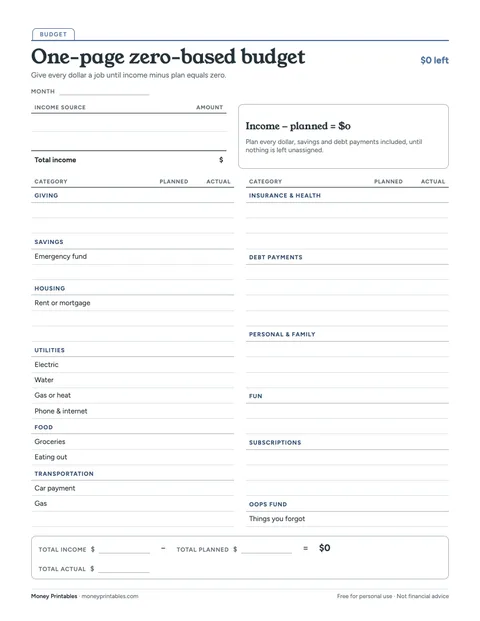
One-page zero-based budget
Give every dollar a job until income minus plan equals zero.
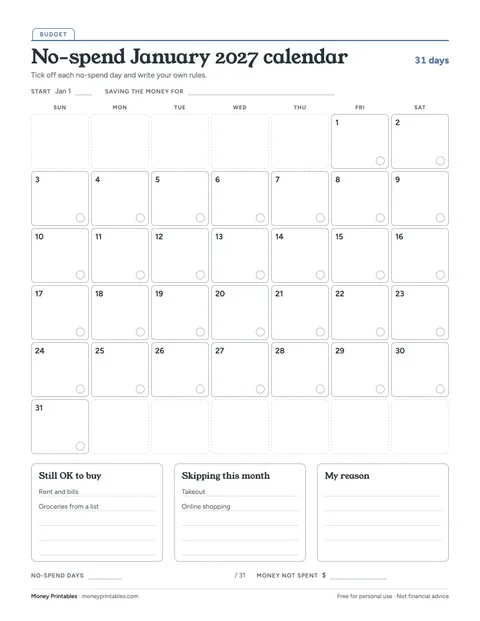
No-spend January 2027 calendar
Tick off each no-spend day and write your own rules.
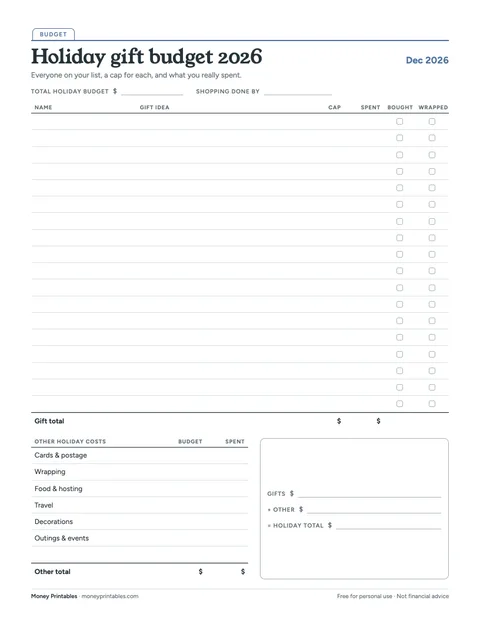
Holiday gift budget 2026
Everyone on your list, a cap for each, and what you really spent.
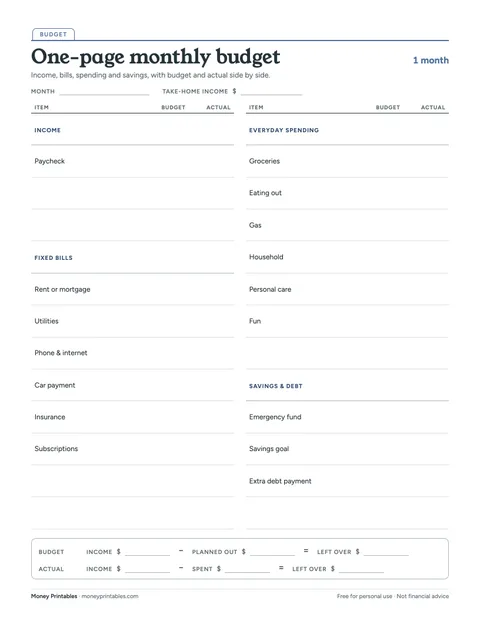
One-page monthly budget
Income, bills, spending and savings, with budget and actual side by side.
This printable is a general planning tool, not financial advice. Read the full disclaimer.