Grocery budget tracker
A weekly grocery budget and a log of every trip.
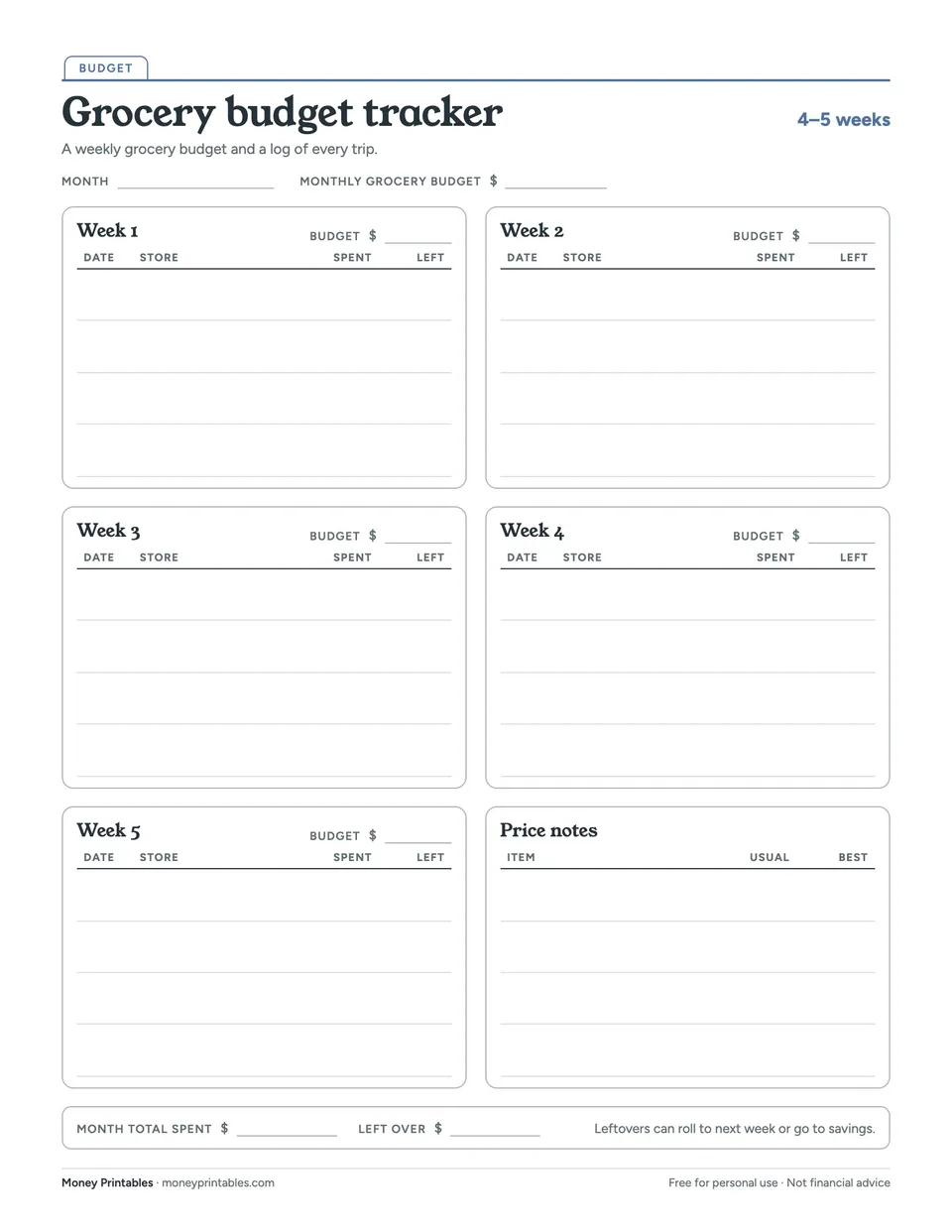
Groceries are one of the easiest places to save, and one of the easiest to overspend. This tracker splits the month into weeks, each with its own budget and a log of every trip.
Write the date, store and amount of each trip and the balance left for the week. The monthly total at the bottom shows how you did.
How it works
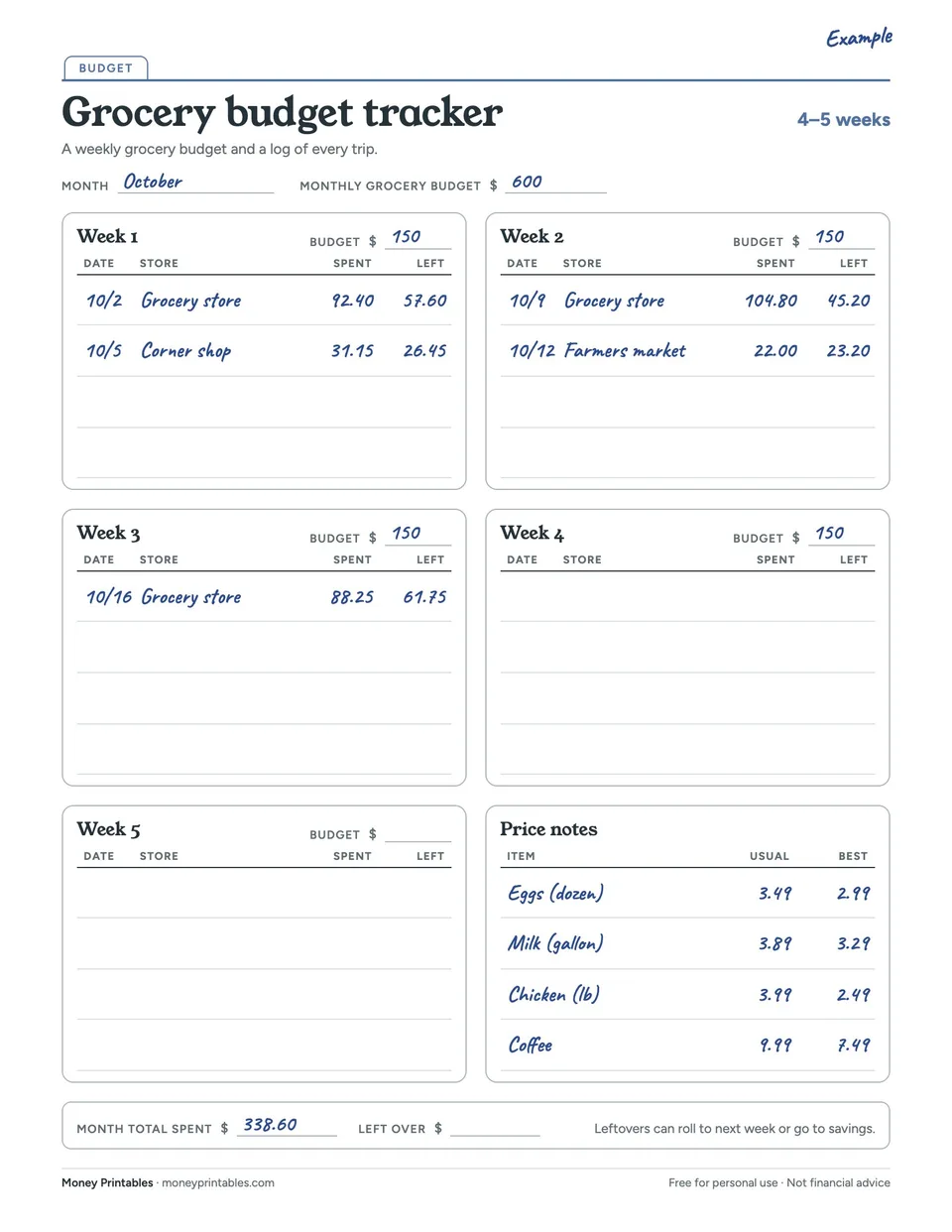
Write your monthly grocery budget and split it into weekly amounts. Log each trip with the date, store and amount, then the balance left for that week. The price notes box helps you remember what a good price looks like for things you buy often.
| Monthly budget | 4 weeks | 5 weeks |
|---|---|---|
| $400 | $100 | $80 |
| $600 | $150 | $120 |
| $800 | $200 | $160 |
How to use it
- Write your monthly grocery budget and divide it into weeks.
- Log each shopping trip with the amount spent and what’s left.
- Carry leftovers to next week or move them to savings.
Ways to use it
- Big monthly shop: use week 1 for the stock-up trip.
- Track takeout separately to see the full food cost.
- Family meal planning: plan meals before each week’s trip.
Tips
- Shop from a list built around a weekly meal plan.
- Check what you already have before you go.
Questions
How much should I spend on groceries?
It depends on household size, location and diet. Start with what you spent last month and set a slightly lower target.
How do I stick to a grocery budget?
Shop from a list based on a meal plan, check what you already have, and track each trip so you know what is left for the week.
Should leftover grocery money roll over?
You can roll it to next week or move it to savings. Either way, tracking it helps.
Goes well with
- Cash stuffing envelope tracker Eight envelopes, each with a budget and a running balance.
- Weekly budget planner Plan one week at a time: money in, bills due, spending and savings.
More budgets
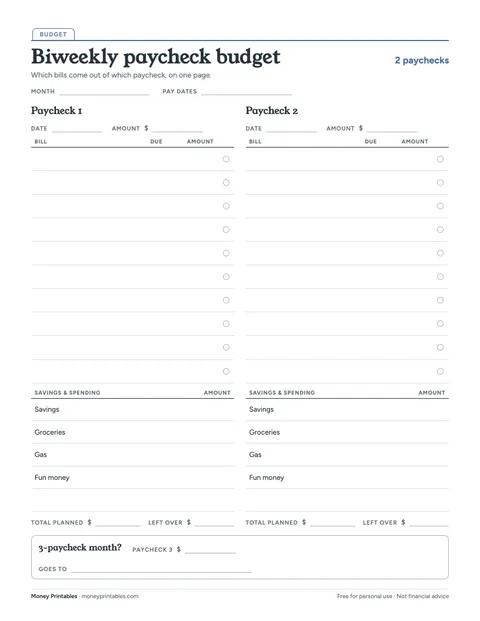
Biweekly paycheck budget
Which bills come out of which paycheck, on one page.
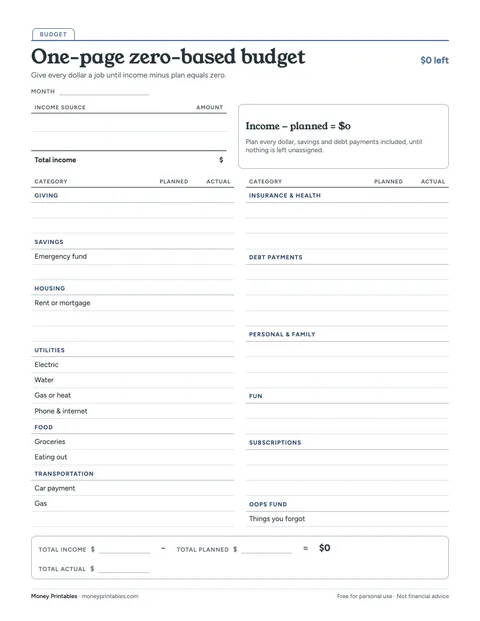
One-page zero-based budget
Give every dollar a job until income minus plan equals zero.
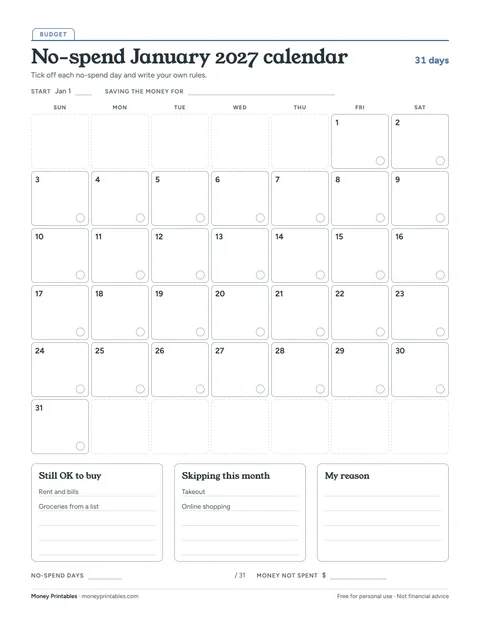
No-spend January 2027 calendar
Tick off each no-spend day and write your own rules.
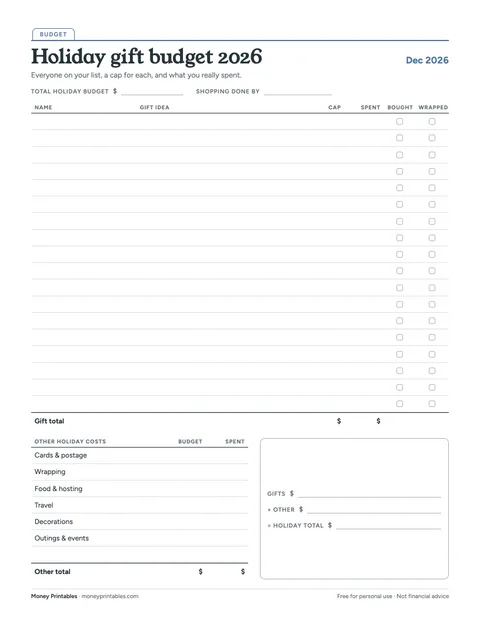
Holiday gift budget 2026
Everyone on your list, a cap for each, and what you really spent.
This printable is a general planning tool, not financial advice. Read the full disclaimer.