50/30/20 budget worksheet
Split your income into needs, wants and savings.
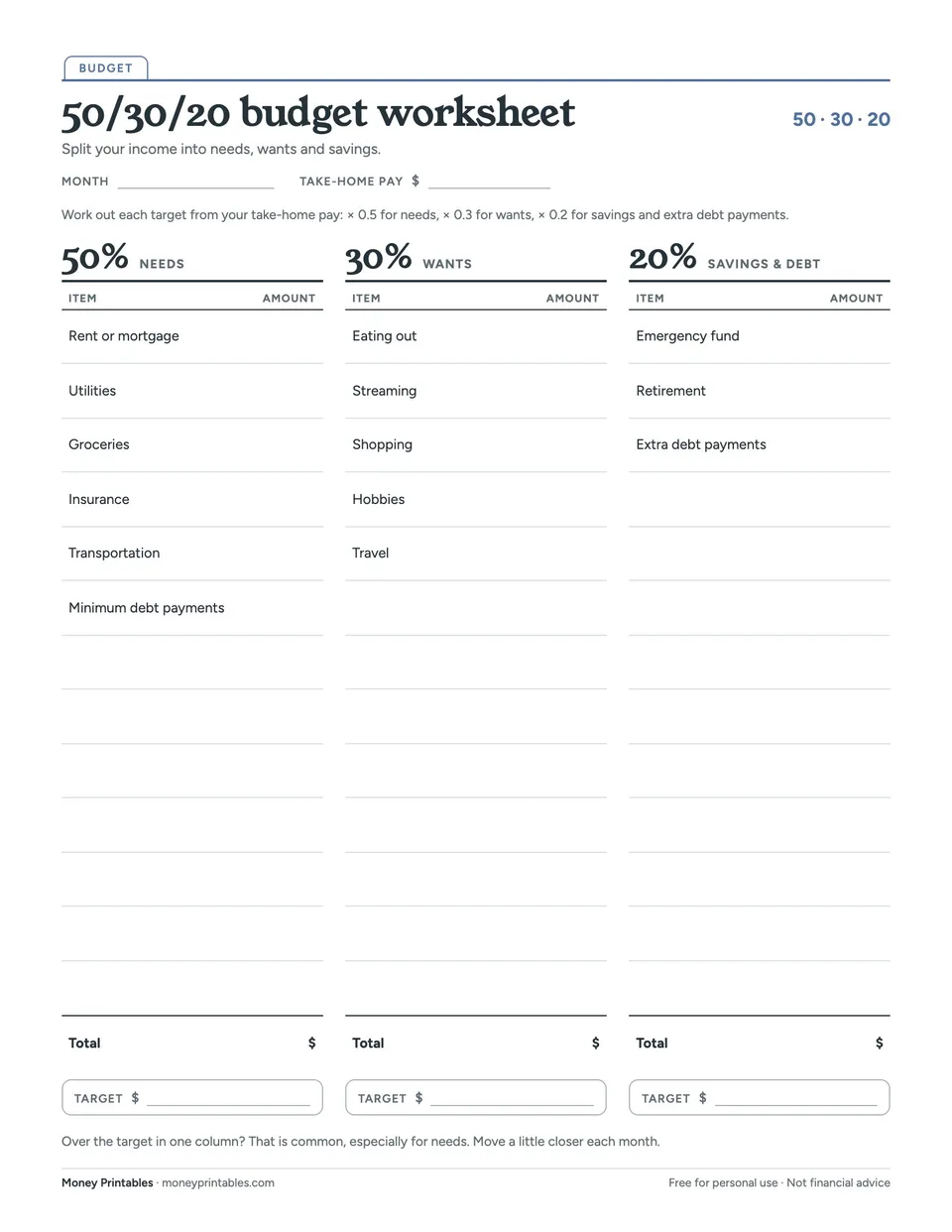
The 50/30/20 rule is an easy way to start budgeting: about half of your take-home pay goes to needs, 30% to wants and 20% to savings and extra debt payments. It gives you a target without tracking every category.
This worksheet does the math with you. Write your take-home pay, work out the three targets, then list what goes in each column and see how close you are.
How it works
Take your monthly take-home pay and split it: 50% for needs, 30% for wants and 20% for savings and extra debt payments. Then list what goes into each column and compare the totals with the targets.
| Take-home pay | Needs 50% | Wants 30% | Savings 20% |
|---|---|---|---|
| $2,500 | $1,250 | $750 | $500 |
| $3,000 | $1,500 | $900 | $600 |
| $4,000 | $2,000 | $1,200 | $800 |
| $5,000 | $2,500 | $1,500 | $1,000 |
How to use it
- Write your monthly take-home pay and work out 50%, 30% and 20% of it.
- List your needs, wants and savings in the three columns.
- Compare each column’s total with its target and adjust.
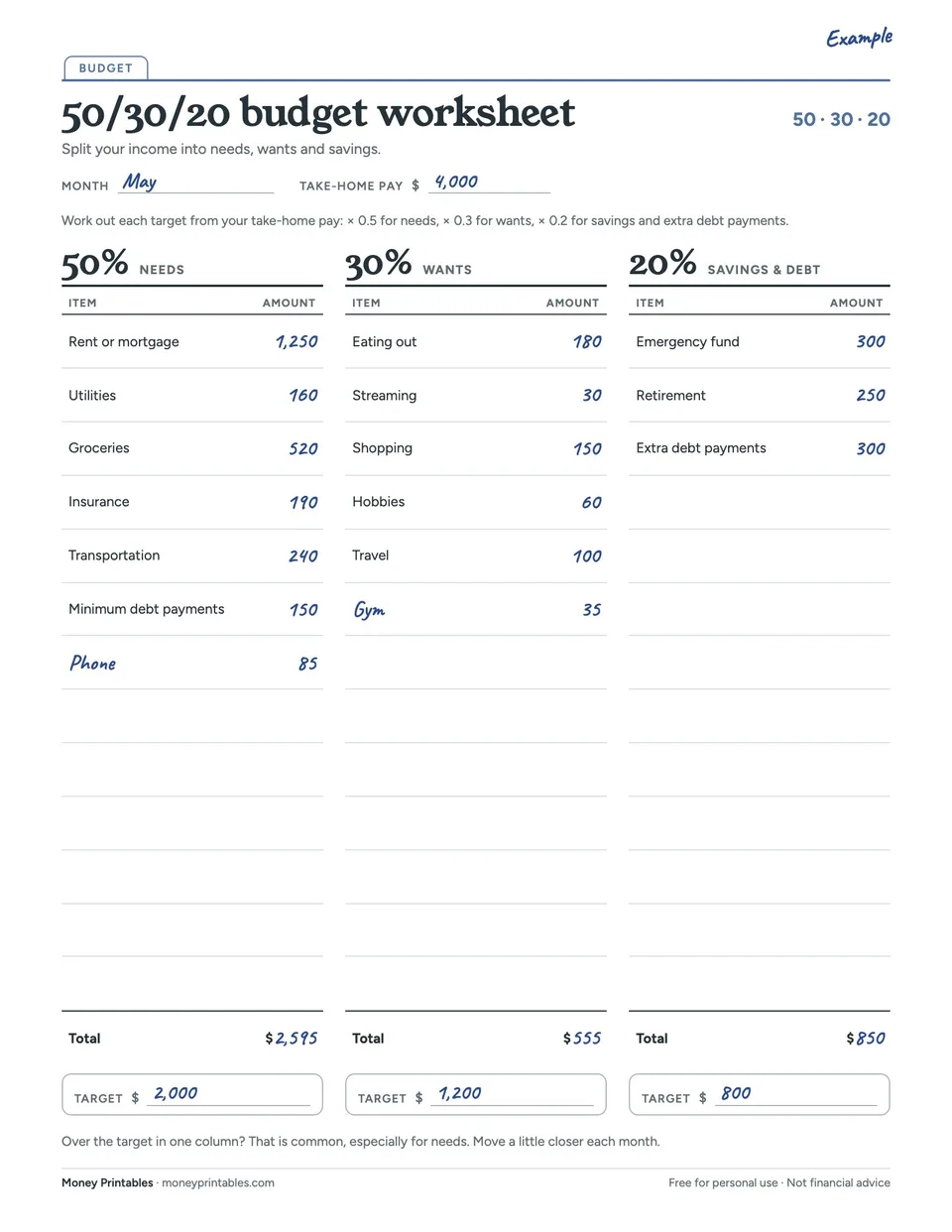
Ways to use it
- High cost of living? Try 60/20/20 and adjust over time.
- Paying off debt? Put extra payments in the 20% column.
- Use it once to set targets, then a monthly budget to track.
Tips
- Needs are what you must pay: housing, utilities, groceries, insurance, minimum debt payments.
- If needs are over 50%, that is common. Treat the split as a direction to move in, not a test.
Questions
What is the 50/30/20 rule?
A simple budgeting guideline: about 50% of take-home pay for needs, 30% for wants, and 20% for savings and extra debt payments.
Is the 50/30/20 rule realistic?
For many people, needs take more than 50%, especially rent. Treat it as a direction to move in rather than a test.
Is 50/30/20 based on gross or net income?
It is usually based on take-home pay: what lands in your account after taxes and deductions.
Goes well with
- One-page zero-based budget Give every dollar a job until income minus plan equals zero.
- One-page monthly budget Income, bills, spending and savings, with budget and actual side by side.
More budgets
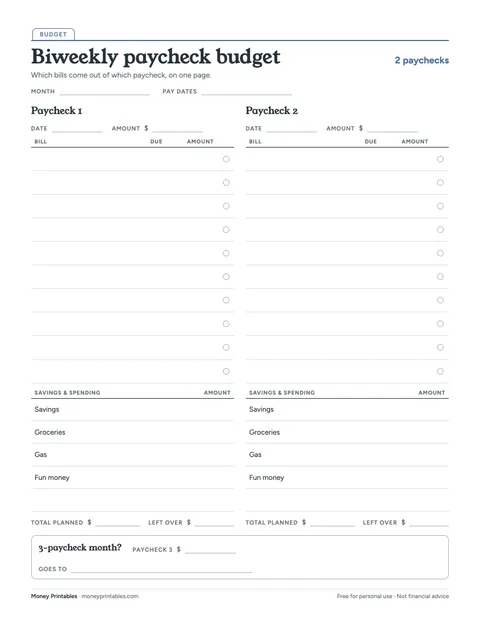
Biweekly paycheck budget
Which bills come out of which paycheck, on one page.
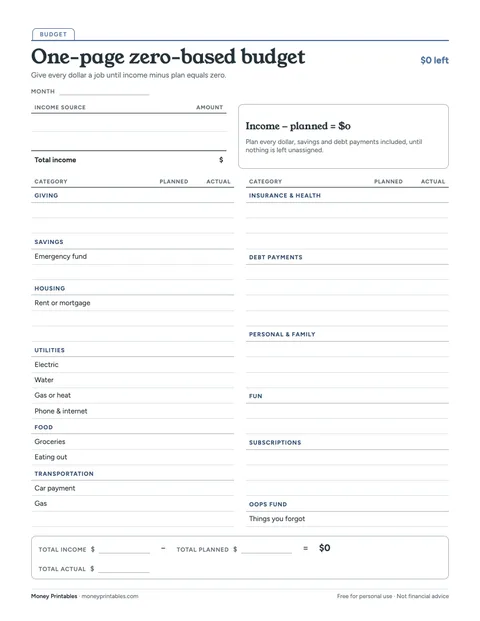
One-page zero-based budget
Give every dollar a job until income minus plan equals zero.
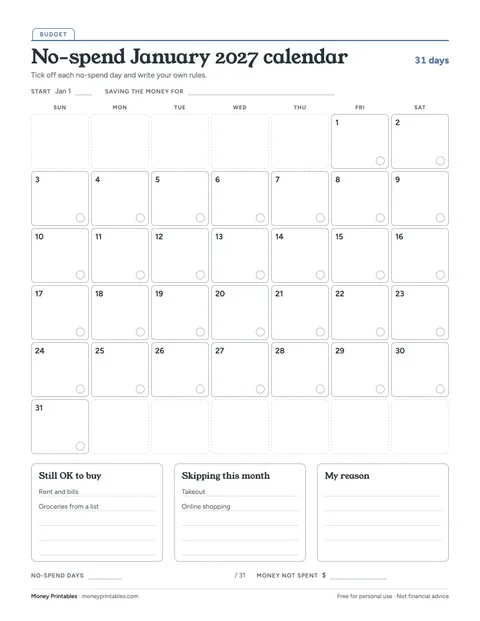
No-spend January 2027 calendar
Tick off each no-spend day and write your own rules.
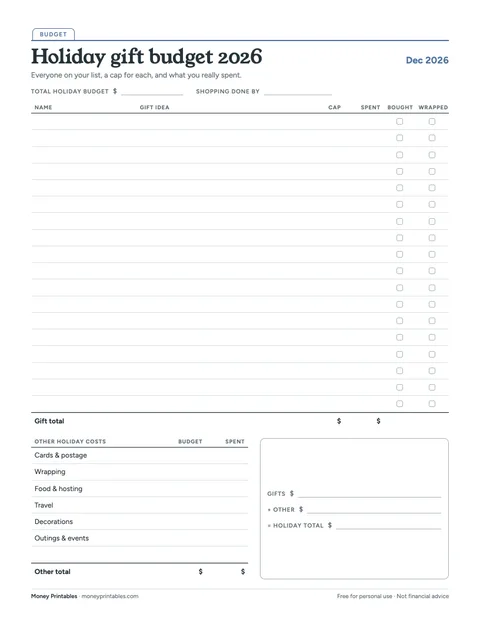
Holiday gift budget 2026
Everyone on your list, a cap for each, and what you really spent.
This printable is a general planning tool, not financial advice. Read the full disclaimer.