Credit card payoff tracker
A color-in thermometer for each of up to six cards.
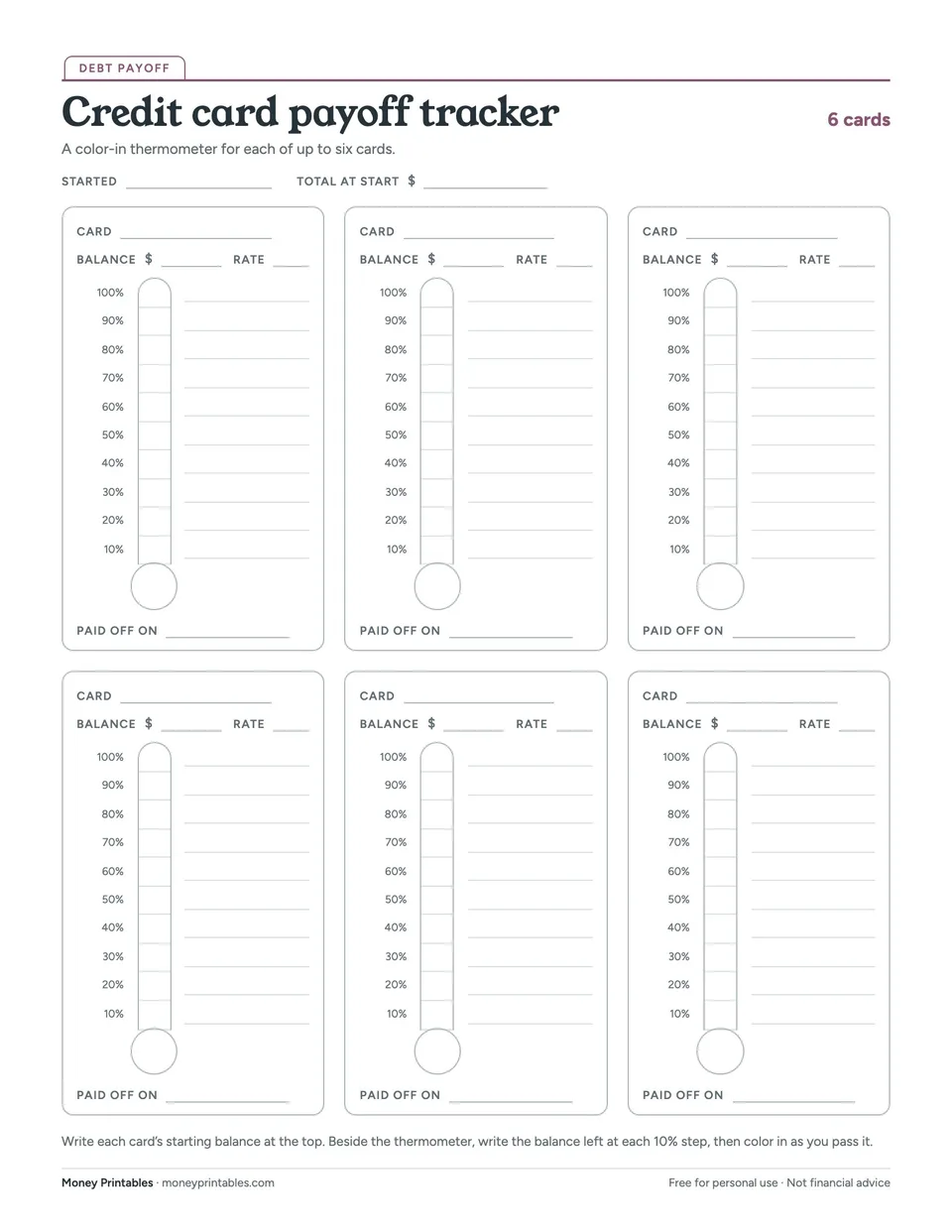
Credit card balances are easy to ignore because the statement only shows this month. This tracker gives each card its own thermometer, so you can watch the balance shrink in tenths all the way to zero.
There is room for six cards. Write each card’s starting balance and rate at the top, mark the 10% steps beside the thermometer, and color in as you go.
How it works
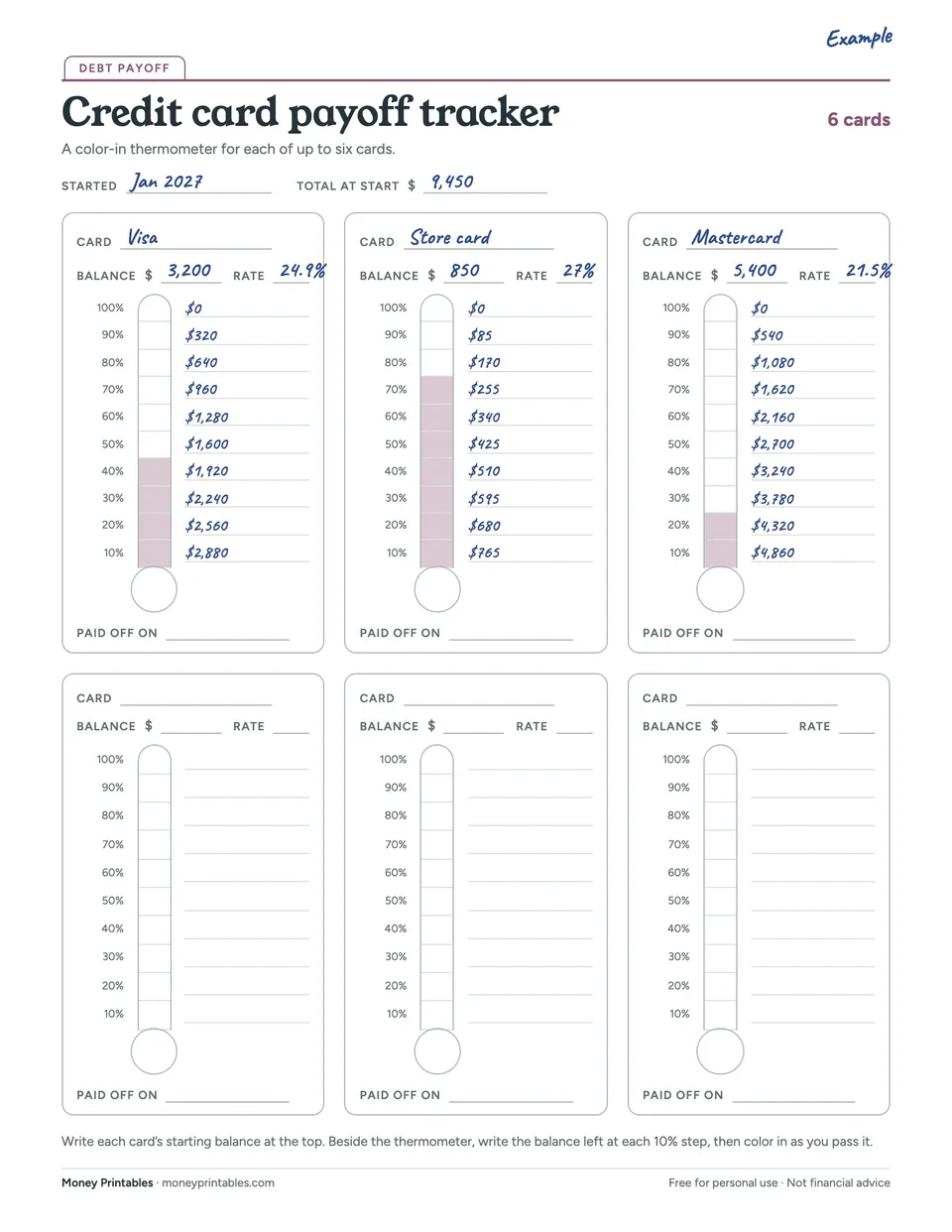
Each card gets its own thermometer, divided into ten steps. Write the starting balance at the top, then the balance left at each 10% step down the side. Every time the balance passes a step, color it in.
How to use it
- Write each card’s name, starting balance and interest rate.
- Divide the starting balance by ten and write each step beside the thermometer.
- Each time the balance drops past a step, color in that section.
Ways to use it
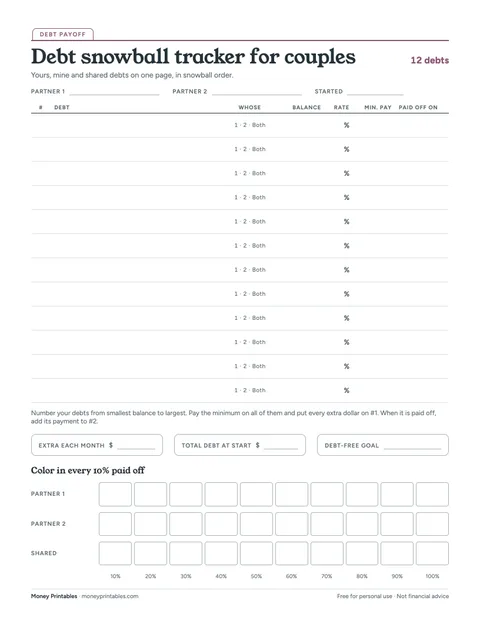
- Highest rate first (avalanche) or smallest balance first (snowball): number the cards in your order.
- Use one thermometer for a car loan or medical bill too.
- Stick it somewhere visible, like inside a cupboard door.
Tips
- Pay off the highest-rate card first to pay the least interest, or the smallest balance first for quicker wins.
- Stop using a card while you pay it off, or the thermometer will go backwards.
Questions
What is the fastest way to pay off credit cards?
Pay at least the minimum on every card and put any extra on one card at a time, either the highest rate (less interest) or the smallest balance (quicker wins).
How do I fill in the 10% steps?
Divide the starting balance by ten. Each step is the balance minus that amount again: for $3,000, the steps are $2,700, $2,400, and so on.
Should I stop using the card while paying it off?
Most people find it much easier, because new charges make the thermometer go backwards.
Goes well with
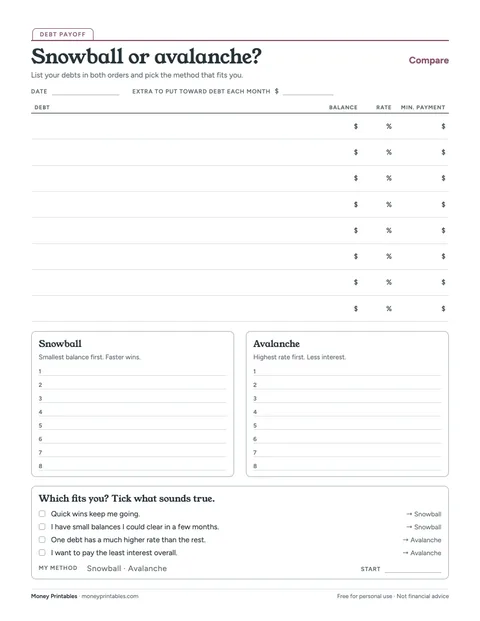
- Debt snowball or avalanche? Decision sheet List your debts in both orders and pick the method that fits you.
- Daily spending tracker Write down everything you spend for a month, and mark each one need or want.
More debt payoff
This printable is a general planning tool, not financial advice. Read the full disclaimer.